Crawl spaces, basements
Mold Cleanup and Treatment
Improving your home's air quality. Mold cleanup and treatment in crawl spaces and basements, where shore moisture sits longest.
Chapter 01
Why shore crawl spaces and basements stay damp
Brick and the towns around it sit on sand with a high water table. Rain drains quickly through the sand, but the groundwater below rises with every big storm, and a crawl space or basement feels it first. Add humid summers and a house that stays closed up between seasons, and you get still, damp air under the floor, which is exactly where mold finds what it needs.
The signs are usually plain once someone looks. A musty smell that comes up through the floor vents, dark staining on joists and foundation walls, insulation that sags or looks wet, a window well that never dries out. Owners often notice the smell first and write it off as an old house. This is the work behind improving your home's air quality.
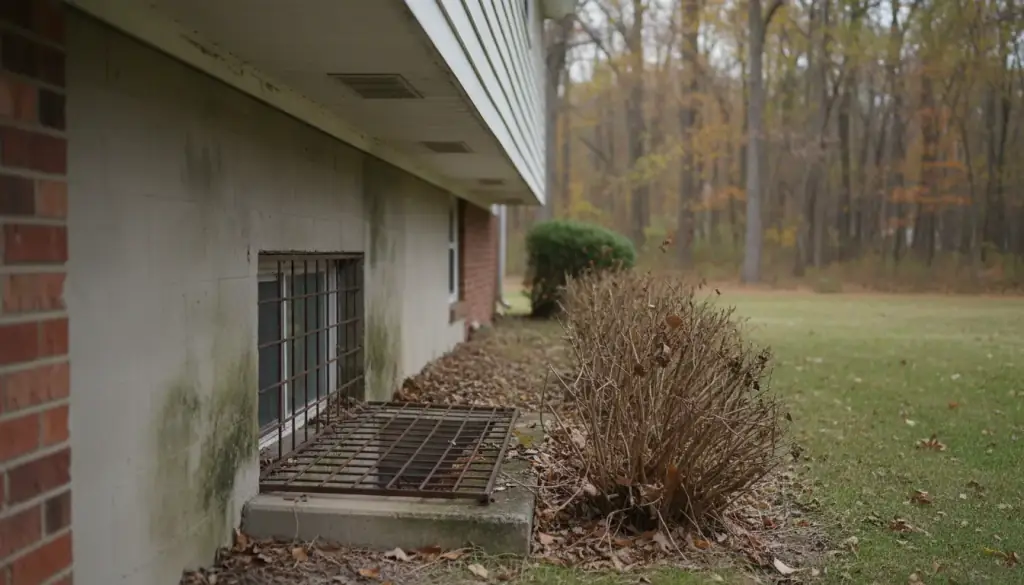
Green staining on a concrete foundation wall beside a basement window well
Moisture first, then cleanup and treatment
A stain is a symptom. The inspection starts by finding where the moisture is coming from: a leaking pipe, a downspout dumping against the foundation, a blocked vent, bare soil under the house. Until that source is understood, any cleaning is temporary. We get into the space, look at the framing and the foundation, and map what is affected before anything gets treated.
Cleanup and treatment then happen on the affected surfaces in the crawl space or basement, following the same inspection, identification, treatment and monitoring steps used on every job. Call or text (732) 829-3881 and describe what you see. You hear what was found and what is planned before the work begins, in plain language.
Chapter 03
Staying dry once the treatment is done
The moisture source matters more than the stain. Gutters and downspouts should carry water well away from the foundation, crawl space vents should be clear, and bare soil under the house needs a plan. In a damp shore house a dehumidifier or a vapor barrier can be part of the answer, depending on what the inspection finds. Those fixes keep the treatment from being a one time event.
Monitoring is the fourth step of the process, so a follow-up check is part of the job, and a detailed digital report follows every visit. Seasonal and vacation homes along the shore are worth checking before they close for the winter and again when they open. Licensed and insured in New Jersey, NJ App. Lic. #54530B, and based right here in Brick.
Licensed and insured. NJ Bus. Lic. #92139B · NJ App. Lic. #54530B. Call or text (732) 829-3881.