Ticks and Mosquitoes in Ocean County Yards: Where They Breed and Wait
The two pests need different things from your yard, which is why one fix rarely covers both.
October 21, 2026 · 4 min read
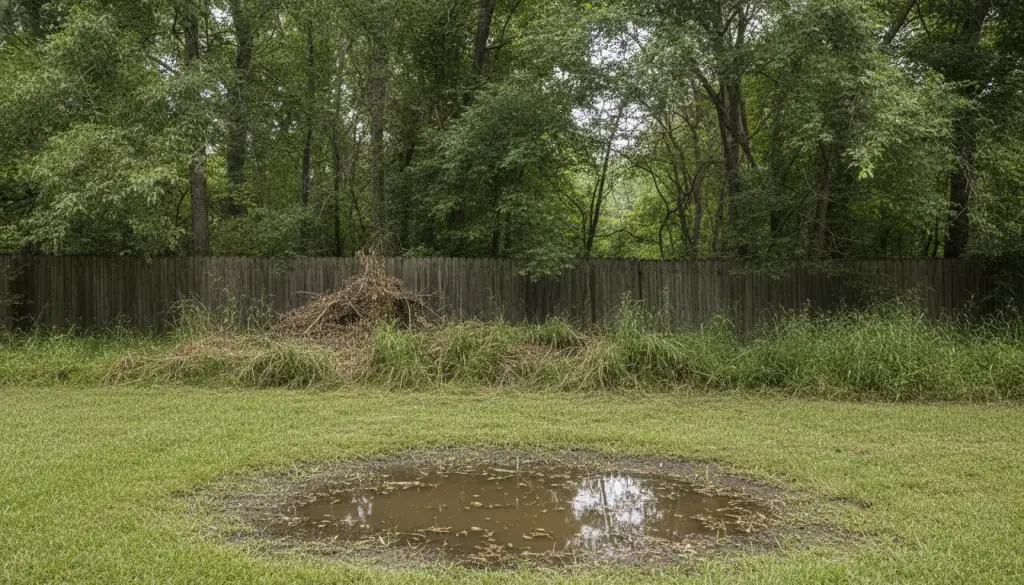
A backyard can look perfectly kept and still be a good home for mosquitoes and ticks. Mowed lawn, a nice patio, a few shade trees: none of that tells you what's happening along the fence line, under the shrubs or in the low corner where water sits after a storm.
Ocean County yards have their own quirks. Lagoons and bayside lots, wooded stretches between neighborhoods, and the humid summers all help these pests along. The good news is that the two of them have very different habits, and once you know what each one wants, you can do a lot yourself.
What mosquitoes need
Mosquitoes need standing water to breed, and not much of it. A bottle cap holds enough for some species. They also rest in shade during the day, tucked into shrubs, ivy and the underside of leaves, then come out to feed when it cools off.
That's why a yard can feel fine at noon and miserable at dusk. The mosquitoes were there all along, waiting in the shaded borders.
- Clogged gutters that hold a few inches of water for weeks
- Buckets, flowerpot saucers, kids' toys and wheelbarrows left upright
- Boat covers, grill covers and tarps that pool water in the folds
- Low spots in the lawn where rain sits for more than a couple of days
- Birdbaths and decorative bowls that never get refreshed
What ticks need
Ticks don't fly or jump. They climb to the tip of a blade of grass or a leaf and wait for something warm to brush past. They prefer shade and humidity and stay out of hot, open, dry lawn. So the danger zones in a yard aren't the middle of the grass. They're the edges.
Fence lines, the border where lawn meets woods, leaf litter banked against boards, stone walls, woodpiles, and the shady strip under shrubs are where ticks collect. Deer, mice and other wildlife passing through carry them in, and pets bring them to the back door.
Habits that make a real difference
You can cut down both pests with some plain yard work, and it matters whether or not you ever hire anyone.
- Walk the yard weekly in warm months and tip out anything holding water
- Clean gutters in spring and fall so they actually drain
- Mow often, and keep the grass shorter along the edges and fence lines
- Rake leaf litter away from the fence, the shed and the foundation
- Trim low branches and thin dense shrubs so sun and wind can reach the ground
- Stack firewood neatly, away from the house, off the soil
- Create a dry, mulched or gravel strip between lawn and wooded edges
Checking for ticks after yard time
Treating the yard lowers the odds, but it doesn't make you immune, so build a habit. After time outside, especially near the edges, check yourself, your kids and your pets. Look in the hairline, behind the ears, under the arms, behind the knees, around the waistband and anywhere else skin folds. Tossing clothes in a hot dryer for a few minutes also helps.
Lyme disease and West Nile are the worries that make people take these pests seriously. If you find an attached tick, or you feel unwell after a bite, call your doctor. That's a medical question, not a pest control one.
What a seasonal yard treatment targets
A seasonal yard program doesn't try to coat the whole lawn. It goes after the places where these pests breed and rest: shrubs, shaded borders, fence lines, leaf litter and the edges of the property. Applications are timed through the season rather than done once, because mosquito populations rebuild quickly and ticks stay active across a long stretch of the year.
Treatment works best alongside the habit changes above. If the gutters are still full of stagnant water, no spray will keep up with what breeds there. A good technician will tell you that and point out what to fix.
It's reasonable to ask how treatment fits with a family that spends all summer in the yard. My Favorite Pest Control offers family and pet-friendly treatment options, and the inspection step is where those questions get answered for your specific property: where the dog runs, where the vegetable beds are, and where the kids play.
How they approach it
The company is locally owned and based in Brick. Brian, the lead technician, started it to give homeowners a more hands-on, scientific alternative to the big national outfits, and it grew by word of mouth. Their approach to outdoor pests follows the same four steps as everything else: inspect the property, identify what's there, treat the breeding grounds, then monitor with scheduled follow-ups. A detailed digital report arrives after each visit.
Want your yard looked at before next season? Call or text My Favorite Pest Control at (732) 829-3881.
My Favorite Pest Control, (732) 829-3881
Call (732) 829-3881More articles
Why Shore Houses Get Mice in the Fall, and What Exclusion Really Means
The scratching in the wall in October started weeks earlier, at a gap you probably walked past all summer.
Mud Tubes on the Foundation: Termite Signs at the Jersey Shore
Those pencil-width dirt lines on the block wall are worth a closer look before anyone paints over them.