Why Shore Houses Get Mice in the Fall, and What Exclusion Really Means
The scratching in the wall in October started weeks earlier, at a gap you probably walked past all summer.
October 21, 2026 · 4 min read
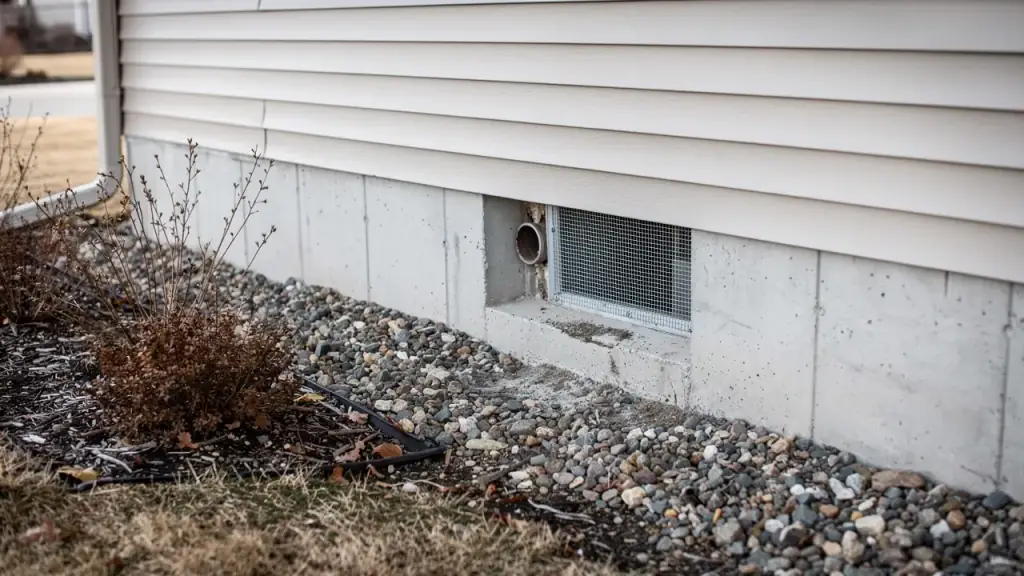
Every October the calls sound alike. Someone hears scratching in the wall after dark, finds droppings in a kitchen drawer, or notices the dog staring at a baseboard. The mouse didn't appear overnight. It found a way in weeks ago, when the first cold nights arrived, and it has been settling in ever since.
Shore homes make that easy. Plenty of them sit on raised foundations with open crawl spaces, wrapped in lattice skirting that has been loosened by a few winters of wind. Utility lines run through the siding in half a dozen places. Beach houses sit empty for stretches, which gives a mouse quiet, unbothered weeks to explore. If you live in Brick, Toms River, Point Pleasant or anywhere along the barrier strip and the bay side, this is your house too.
Where mice actually get in
A mouse can squeeze through a gap far smaller than most people expect. A common rule of thumb is that if you can slide a pencil into a hole, a mouse can use it. That means the entry points aren't dramatic. They're ordinary, and they're easy to miss from the lawn.
- Gaps around pipes, cables and gas lines where they pass through siding or the foundation
- Torn or missing vent screens at ground level, and crawl space vents that were never screened at all
- Lattice skirting that has pulled away from the frame, or has a corner pushed in
- Garage door corners where the bottom seal has worn thin or curled
- Soffit and fascia joints up under the roofline, which mice reach by climbing shrubs, downspouts or rough siding
Why the crawl space is the highway
On a raised shore house, the crawl space is rarely just a crawl space. It's a protected, dry-enough corridor with insulation to nest in and pipes and wiring to follow straight up into the walls. Once a mouse is under the floor, it can reach the kitchen, the bathrooms and the attic without ever crossing open ground again.
That's why a mouse problem that seems to be in the kitchen is often solved from the outside and underneath. The droppings show you where the mouse is eating. They don't tell you how it got there.
Why bait and traps alone don't finish the job
Setting traps inside the house catches the mice that are already in. That's useful, and sometimes it's the right first move. But if the entry points stay open, the next mouse follows the same scent trail and the same warm air through the same gap. You end up catching mice every few weeks and never reaching the end of it.
It's a little like bailing a boat without patching the hull. The bailing is real work, and it does keep you afloat, but the water keeps coming until somebody finds the leak.
What exclusion means
Exclusion is the patching. It means walking the whole outside of the structure, finding every place a rodent can get in, and closing each one with materials a mouse can't chew through, such as metal mesh, hardware cloth and the right kind of sealant. It also means checking the places people forget: the crawl space perimeter, the attic soffits, the spot behind the air conditioner line set.
Done properly, exclusion is paired with trapping. You remove the animals that are inside, then you close the building behind them, so nothing new can come in. My Favorite Pest Control describes its rodent work in exactly those terms: find the entry points, trap safely, seal, and keep the crawl space and attic from becoming an open door again.
What you can do this week
You don't need to wait for a visit to make the house less attractive. A short walk around the outside with a flashlight, ideally at dusk, tells you a lot. Look for gaps where anything enters the house. Look for gnawed edges, greasy rub marks along the foundation, and droppings tucked in the corners of the garage or under the sink.
- Store pet food and birdseed in sealed containers, not open bags in the garage
- Move firewood and boxes away from the foundation so there's no cover against the wall
- Trim shrubs back from the siding and the roofline so mice can't use them as a ladder
- Check that the garage door seal sits flat on the slab all the way across
- If the house is seasonal, ask someone to check it for droppings before you open it up for the season
If you find signs, resist the urge to just fill a drawer with traps and hope. The sooner someone finds the entry points, the fewer mice get established, and the less cleanup you face later.
How a visit works
My Favorite Pest Control is a locally owned company out of Brick, started by Brian, who works as the lead technician. The process starts with an inspection of the whole property, then identification of what you're dealing with, then treatment, then scheduled monitoring to make sure the problem stays solved. You also get a detailed digital report after every visit, so you can see what was found and what was sealed. Their promise is a plain one: if the pests return, so do they.
Hearing noises in the walls or finding droppings? Call or text My Favorite Pest Control at (732) 829-3881, Monday through Saturday, 9am to 5pm.
My Favorite Pest Control, (732) 829-3881
Call (732) 829-3881More articles
Mud Tubes on the Foundation: Termite Signs at the Jersey Shore
Those pencil-width dirt lines on the block wall are worth a closer look before anyone paints over them.
Ticks and Mosquitoes in Ocean County Yards: Where They Breed and Wait
The two pests need different things from your yard, which is why one fix rarely covers both.